Why a flood is not just "wet dirt"
The water that enters a unit carries soil, grit, hydrocarbons off the floor, organic matter and, very often, the contents of the premises themselves. When it recedes it leaves a mineral crust that bonds as it dries, and it sets off accelerated rusting on everything metallic.
On top of that, the building is loaded with moisture. That means any hygroscopic residue you leave behind stays active, and that drying is part of the job, not the end of the job.
Step 1 — Mechanical removal before chemical
Silt is removed in bulk: shovel, wet vacuum, pressurised water. Applying detergent to a layer of mud is throwing product away: the surfactant is spent emulsifying soil instead of attacking what is bonded to the surface.
The rule is that the chemistry comes in once you can see the material underneath.
Step 2 — General degreasing
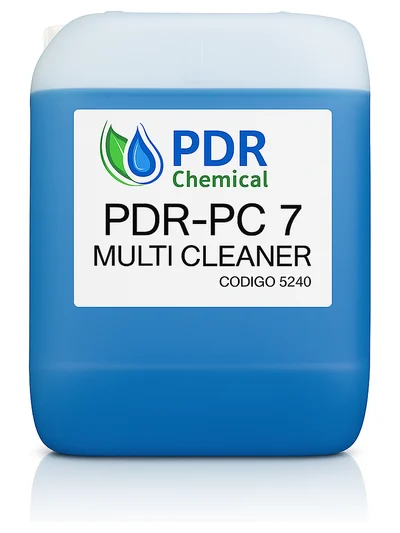
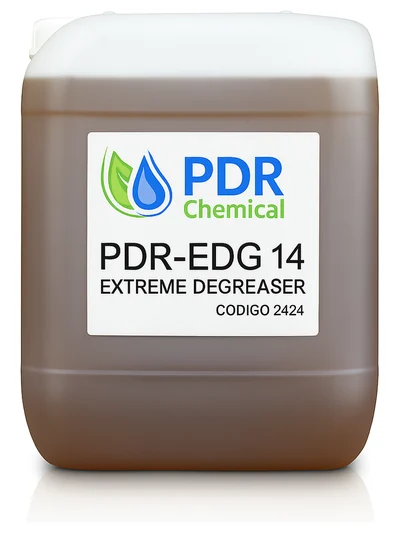
With the surface in view, it is time for the general wash. On industrial flooring with grease and hydrocarbons, the PDR-EDG14 Extreme Degreaser handles the heavy load; on other materials and on mixed surfaces, the PDR-PC7 Multi Cleaner covers the most ground, because it is neutral and takes plastics, wood, lacquered finishes, aluminium, anodised finishes, marble, glass and ceramic.
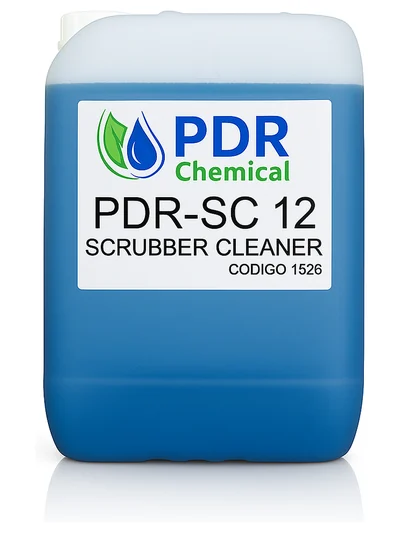
If the floor is going to be worked with a scrubber dryer, the specific product is the PDR-SC12 Scrubber Cleaner: it is formulated with controlled foam, which is what stops the machine losing suction after five minutes.
Step 3 — Mineral hazing, the stage that gets forgotten
When the water evaporates it leaves carbonates. The result is a floor that is clean but looks dull, with a whitish haze that will not come off with more detergent because it is not organic soiling: it is scale.
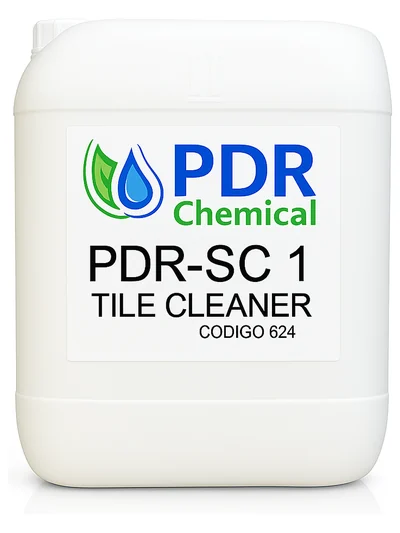
An acidic descaler lifts that. The PDR-SC1 Tile Cleaner is designed as the final stage of the process, once silt, grit and mineral residue have been removed, to restore the original appearance and prevent hazing or residual deposits. It is used diluted: 1:9 for heavy scale and 1:19 for general cleaning.
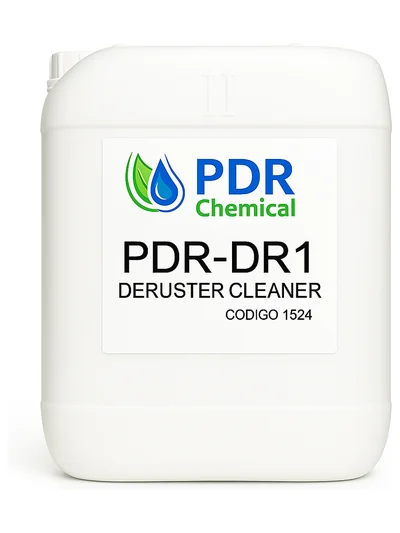
If what you have is rust on structures, machinery or metalwork, the product is the PDR-DR1 Deruster Cleaner, formulated to remove rust, mineral scale and corrosion residue from metal surfaces.
Step 4 — Foam, rinsing and drying
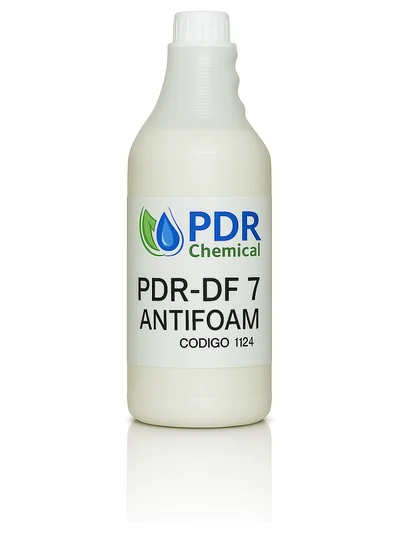
On large remediation jobs the operational enemy is foam: it swamps the water recovery system, sets off the scrubber dryer’s alarms and forces you to stop. The PDR-DF7 Antifoam is added directly to the tank or to the circuit, at between 5 and 25 ml per 5 litres of solution, and it can be used preventively.
Then rinsing and drying. Drying is not optional: residual moisture is what later produces mould, odour and rust. Dehumidification and forced ventilation until readings are stable.
Step 5 — Halt the rusting that comes afterwards
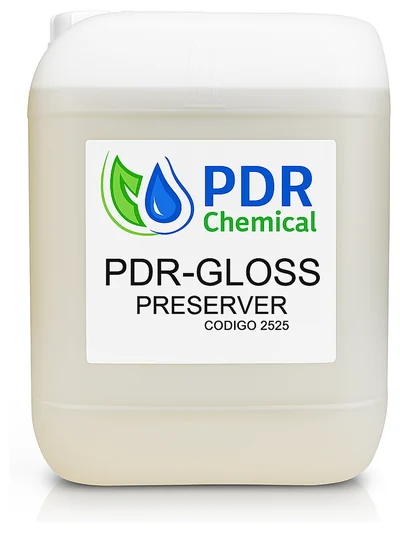
Just as after a fire, freshly derusted, bare metal in a damp building will rust again. The PDR-GLOSS Preserver seals and protects, is used neat and requires no rinsing.